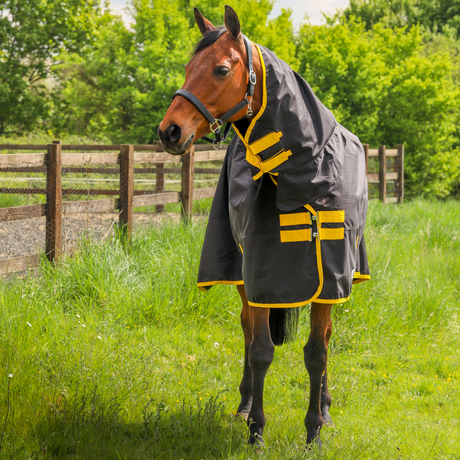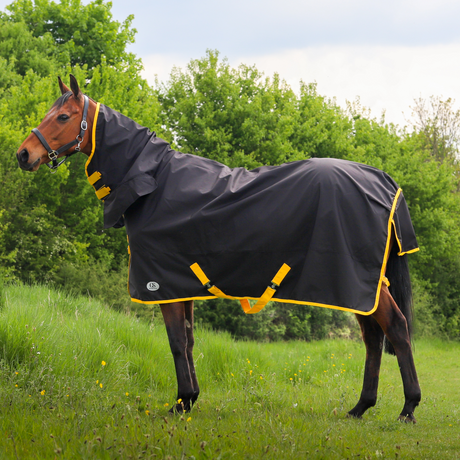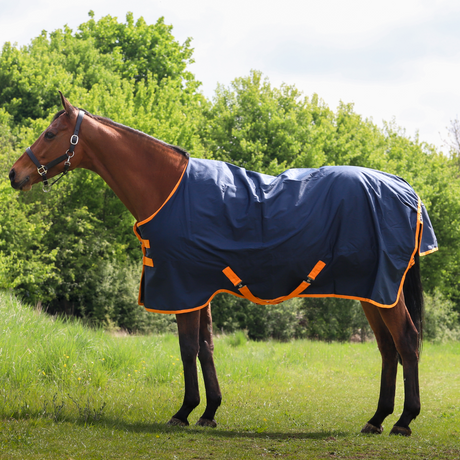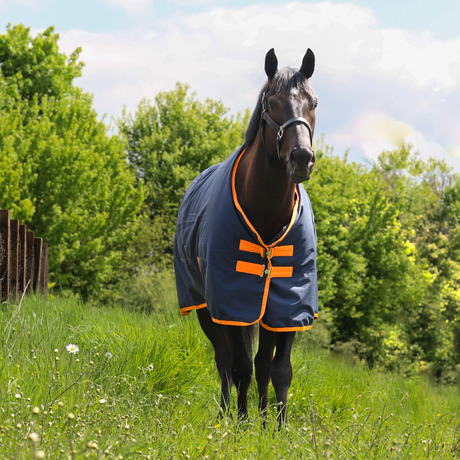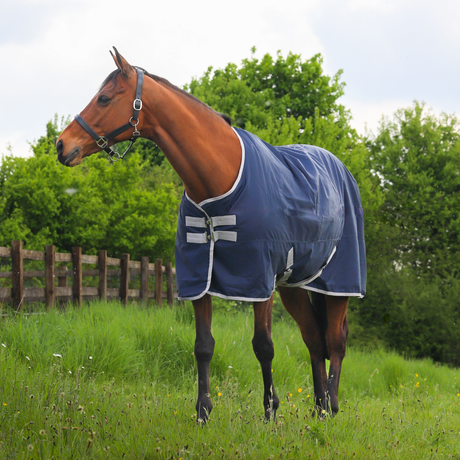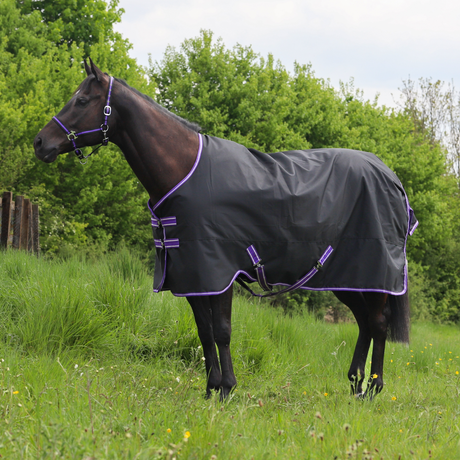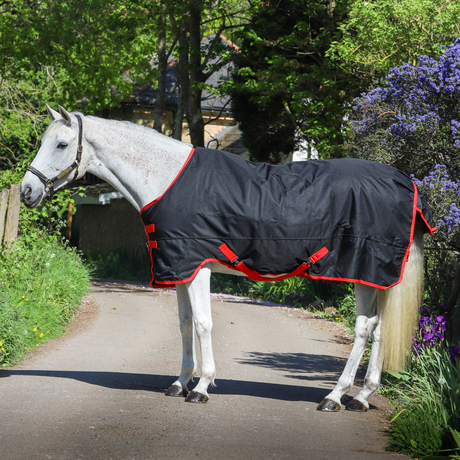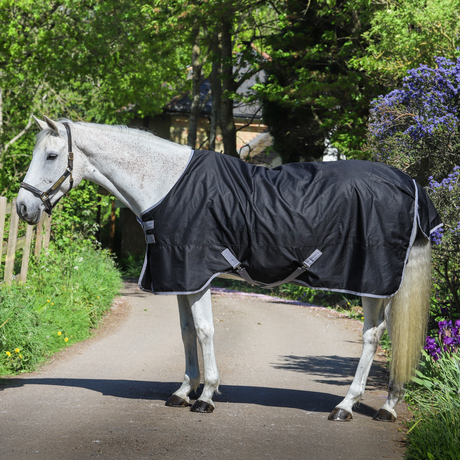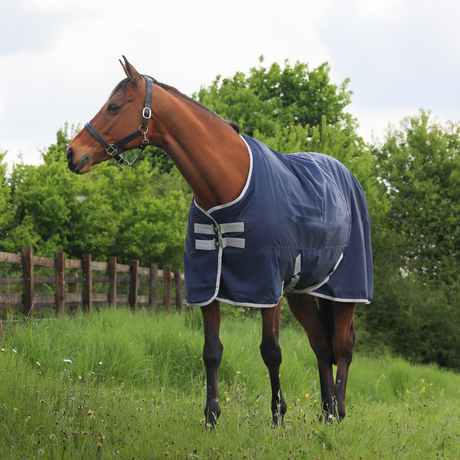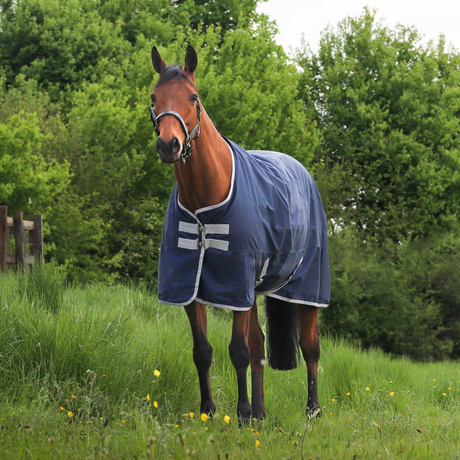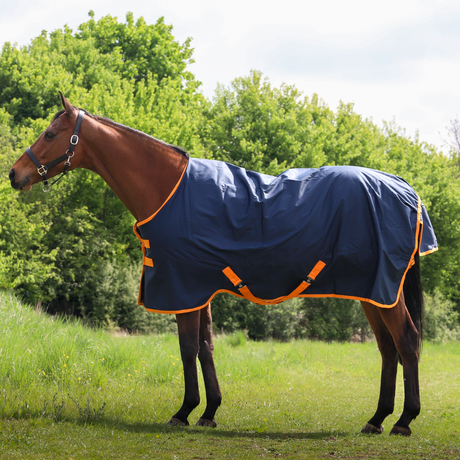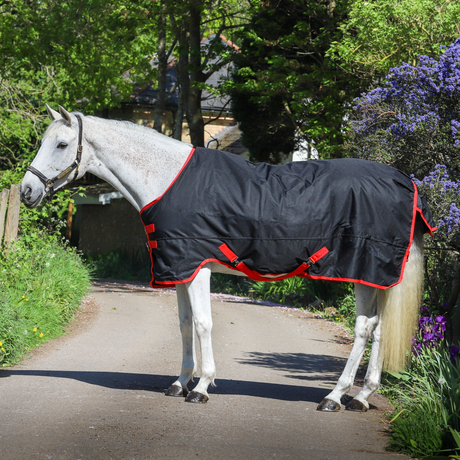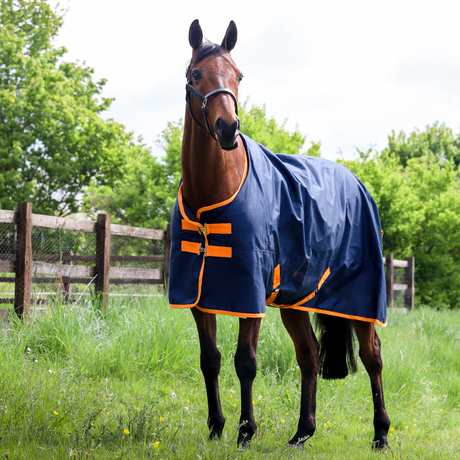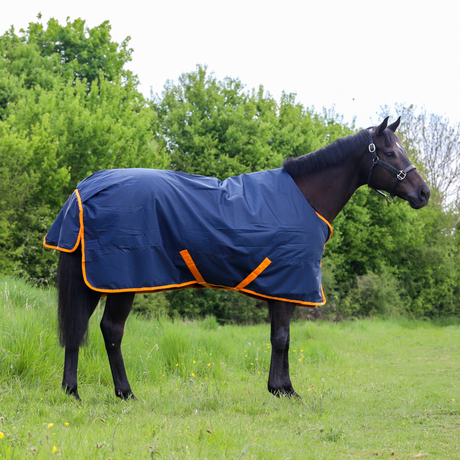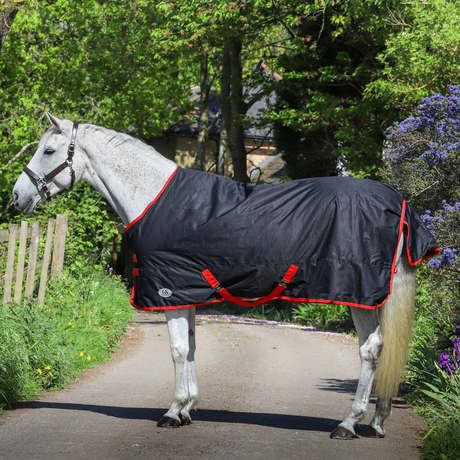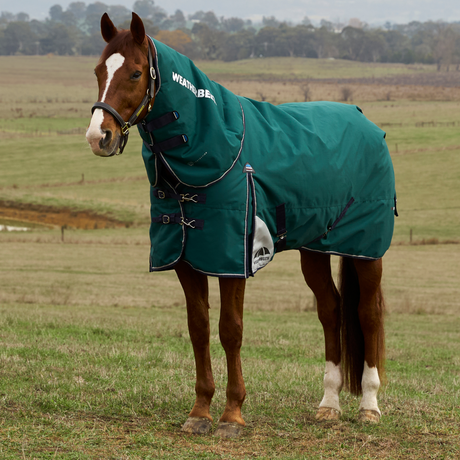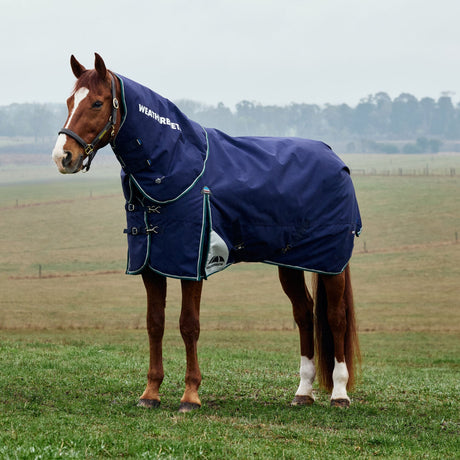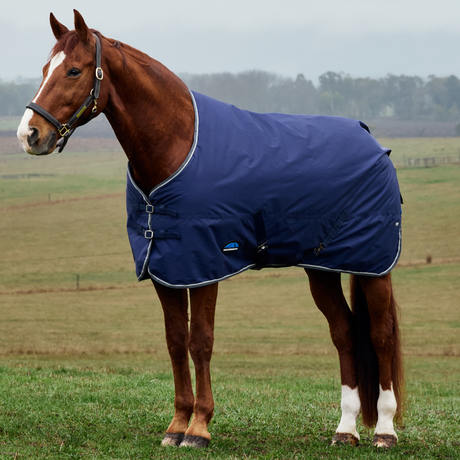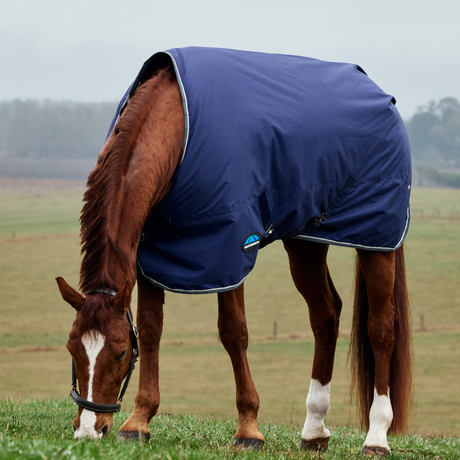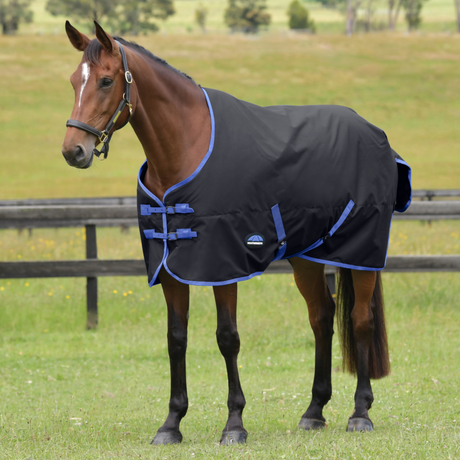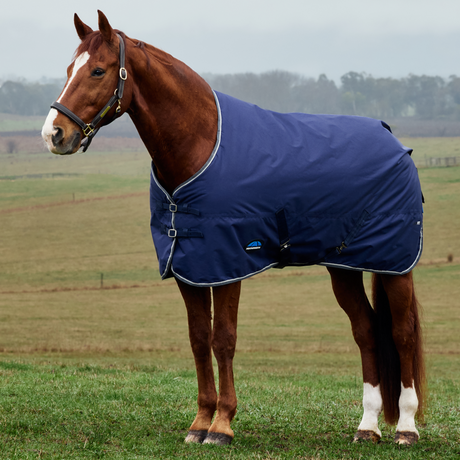
The clocks are about to go back and the fields are only getting wetter. Now is the time to sort your turnout rugs.
The right rug keeps your horse warm, dry and comfortable all winter. The wrong one rubs, slips or leaks. This guide covers what the labels actually mean, how to measure and fit properly, and how to make your rugs last, drawing on guidance from the British Equestrian Trade Association (BETA).
Contents
- Know your rug: the terms that matter
- Getting the size right
- Fitting and fastening
- Looking after your rug
- Ready to rug up?
Know your rug: the terms that matter
We've all read a label or product description full of confusing language we don't understand, and horse rug labels are no different—full of jargon that needs context to fully understand what it means. Here's the breakdown to help you full understand:
Fill weight
Fill is the insulation inside the rug, measured in grams per square metre. More grams, more warmth.
| Temp | Clipped | Unclipped |
| Above 15°C | No rug | No rug |
| 10 to 15°C | Lightweight or no rug 0–100g |
No rug |
| 5 to 10°C | Lightweight 50–100g |
Lightweight or no rug 0–100g |
| 0 to 5°C | Mediumweight 150–250g |
No rug, light or mediumweight 0–250g |
| Below 0°C | Heavyweight plus liner 300g+ |
Medium or heavyweight 150–300g |
Important: This chart is for reference only. Clip, age, condition and breed all play a part. Match the fill to your horse, not just the forecast.
Denier
Denier measures the weight of yarn in the outer fabric. The higher the number, the tougher the rug. 600D is for everyday strength while 1200D and above is built for horses who are hard on their rugs.
Ripstop
This is a weave designed to stop small tears spreading. It makes a rug tougher, but not indestructible—so it wouldn't save your rug from barbed wire.
Waterproof and breathable
Waterproof refers to the outer fabric. Breathable means a membrane or coating lets sweat and moisture escape from the horse's skin. You want both, so your horse stays dry from the outside in and the inside out.
No rug is fully watertight. Stitching, straps and the tail flap can let water through, especially after hours of heavy rain.
Taped seams
You might see 'taped seams' in product descriptions for waterproof clothing. It means a tape is over the seams on the inside of the fabric to add a barrier against leaks.
Neck options
- Standard neck: Sits at the withers. Simple and versatile.
- High neck: Extra coverage up the neck without the weight or warmth of a full neck.
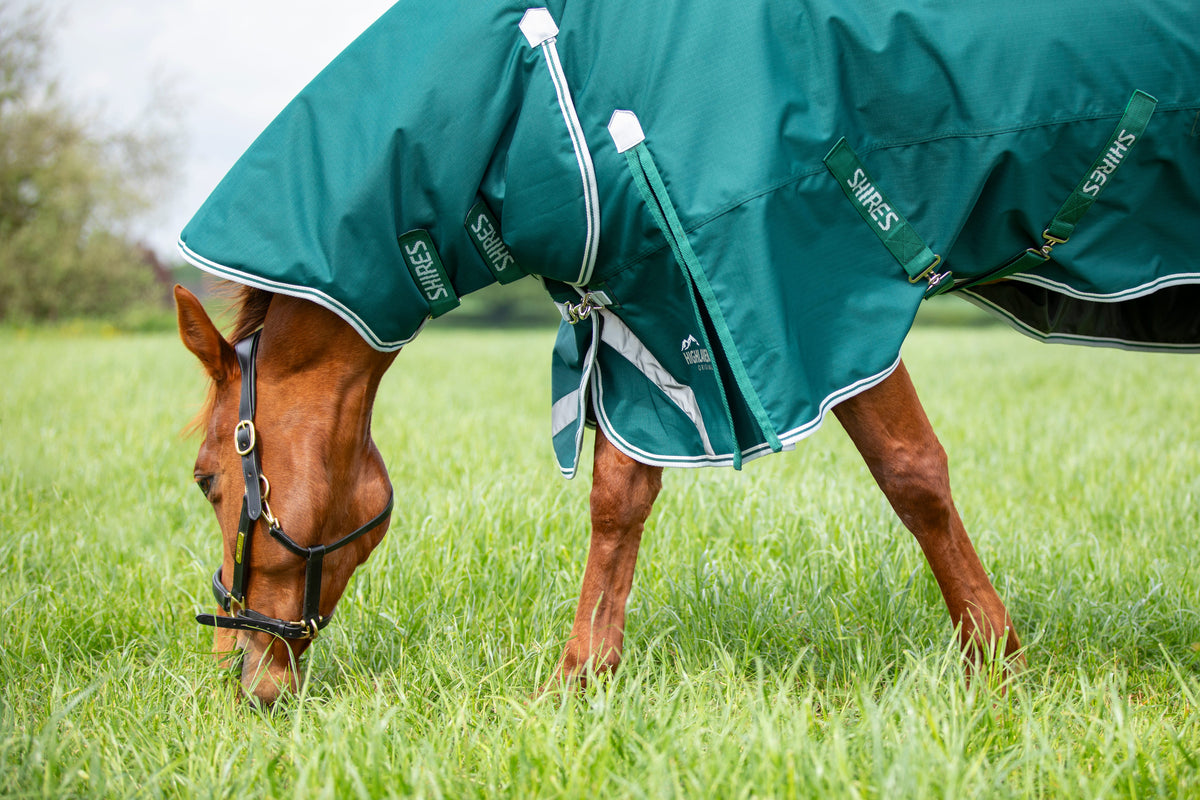
- Combo or detachable neck: Full protection from the weather and a cleaner mane. Detachable versions fasten on with zips or Velcro, so you can take them off on milder days.
Straps and fastenings
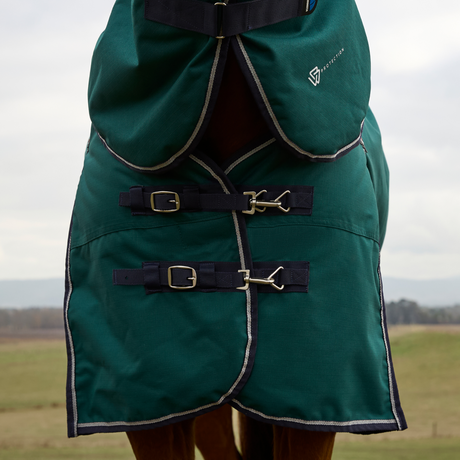
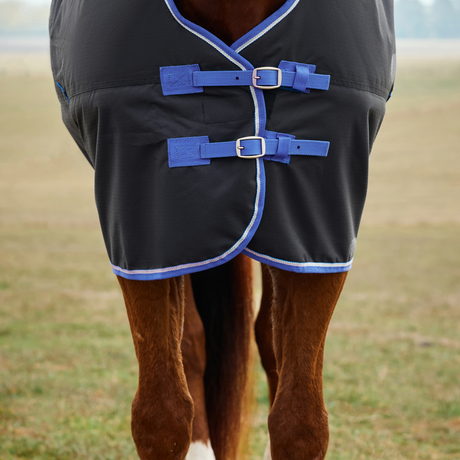
- Chest straps: Fasten across the front. Most rugs have one or two.
- Cross surcingles: Cross under the belly to hold the rug in place.
- Leg straps: Clip at the back of the rug and loop between the hind legs.
- Fillet string: Sits loosely under the tail to stop the rug blowing up in the wind.
- Extra deep: A longer drop for more belly and leg coverage.
Rugs are designed to give way if your horse gets caught. That is a safety feature. Keep fields clear of wire and sharp edges to protect both horse and rug.
Getting the size right
Fit is everything. A rug that fits stays put. One that doesn't will slip, rub and strain at the straps.
- Stand your horse square on level ground.
- Measure from the centre of the chest, around the side of the body, to where you want the rug to finish at the back of the quarters.
- Use a soft tape and note the measurement in feet and inches. Most UK rugs are sized in 3" increments.
- Check the brand's size guide. Like your own clothes, different makes cut differently.
Two horses the same height can need very different sizes. Always measure rather than guess.
Broad-chested horse? A chest extender is often a better fix than sizing up, which can leave the rug too long. Some shapes simply suit some brands better.
Trying a new rug? Put a clean summer sheet underneath first. If it doesn't fit, it stays clean enough to return.
Fitting and fastening
The right size only works if the rug is fitted properly.
Check the front
The rug should sit well up the neck, in front of the withers. Your horse needs to move freely through the shoulders without the rug dragging back. If it slips, pressure builds and sore spots follow.
Check the back
Pull the rug back into place so the coat lies flat underneath. The seam between the rug and the tail flap should sit at the top of the tail. Lower than that and the rug is probably too big. A rug that's too big will rub more than one that's slightly small.
Leg straps
- Take the left strap between the hind legs and clip it on the left side.
- Take the right strap between the hind legs, loop it through the left strap and clip it on the right side.
- Adjust both equally so you can fit a hand's width (around 4" to 5") between strap and thigh.


Linking the straps stops them rubbing and helps them pull the rug straight. Too loose and the rug will shift.
Cross surcingles
The straps should cross in the middle of the belly, well forward of the stifle, on the roundest part of the body. Leave a hand's width between strap and belly. Too loose and a leg can get caught. Too tight and it pinches.
Fitted this way, your rug should stay put through rolling, grazing and the usual field antics.
Looking after your rug
A good rug is an investment. Treat it well and it will see you through several winters.
Every day
Take the rug off and check both horse and rug. Look for rubs, wet patches and anything loose. Never rug a wet horse.
Have a spare
One rug won't get you through a British winter. Heavy rain, a torn strap or a muddy roll can put your main rug out of action for days. Keep your old one as a backup when you buy new, or invest in a spare so there's always a dry rug ready.
Regular checks
Clean and check straps, clips and stitching often. Waterproofing wears over time, so reproof your rugs when water stops beading on the surface. Use a proofer made for horse rugs, or send it to a specialist rug care company.
Washing at home
- Brush off dried mud first.
- Wash at 30°C or below with a mild, non-bio detergent. Anything harsher can strip the waterproofing.
- Hand washing is gentler on the coating and helps it last longer.
- Drip or line dry. No tumble dryer, no dry cleaning.
- Always follow the manufacturer's care label.
End of season
Clean and dry your rugs thoroughly, get any repairs done, then store them somewhere dry and airy. A rug bag keeps them clean until next autumn.
Ready to rug up?
From lightweight sheets to heavyweight combos, our turnout rugs cover every horse and every forecast. Filter by fill weight, neck style and size to find the right one fast.
Source
This guide is based on Guide to Purchasing Your Outdoor Rug by the British Equestrian Trade Association (BETA).