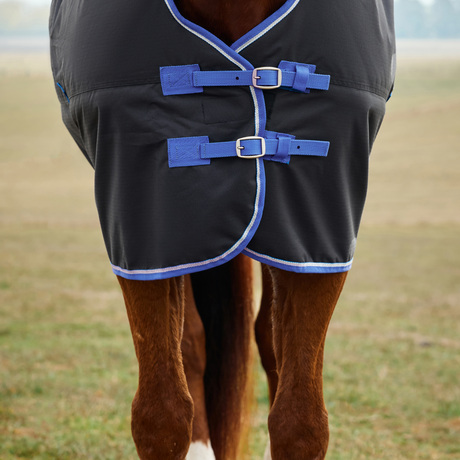
What rug weights actually mean
The number on a rug, such as 100g or 300g, is the weight of the polyfill inside, measured in grams per square metre. The higher the number, the warmer the rug.
|
Weight |
Fill |
Best for |
|---|---|---|
|
No fill |
0g |
Keeping off wind and rain without adding warmth |
|
Lightweight |
50g to 100g |
Mild, wet days and chilly autumn nights |
|
Mediumweight |
150g to 250g |
The UK winter workhorse for most horses |
|
Heavyweight |
300g+ |
Cold snaps, clipped horses and poor doers |
Most horses will get through a UK year with three rugs: a 0g turnout, a medium turnout and either a heavyweight or a liner to add warmth when it drops.
Rug temperature guide
Use this as a starting point, then adjust for your horse. Temperatures are the lowest expected that day or night.
Stabled
|
Temperature |
Clipped |
Unclipped |
|---|---|---|
|
Above 15°C |
No rug or 0g |
No rug |
|
10°C to 15°C |
0g to 100g |
No rug or 0g |
|
5°C to 10°C |
150g to 250g |
50g to 100g |
|
0°C to 4°C |
300g+ |
150g to 250g |
|
-10°C to 0°C |
300g+ |
150g to 300g |
Turned out
|
Temperature |
Clipped |
Unclipped |
|---|---|---|
|
Above 15°C |
No rug |
No rug |
|
10°C to 15°C |
No rug or 0g to 100g |
No rug |
|
5°C to 10°C |
50g to 100g |
No rug or 0g to 100g |
|
0°C to 4°C |
150g to 250g |
No rug or 0g to 250g |
|
-10°C to 0°C |
300g+ with liner |
150g to 300g |
Remember: this is a guide only. Each horse is different, depending on their breed, age, and whether they are turned out or stabled. Every horse runs at a different temperature. Over or under rugging can affect your horse's comfort, so check their body temperature regularly.
Before you pick a rug, think about:
- Breed and type. Natives and cobs hold heat well and often need less. Thoroughbreds and fine-coated horses feel the cold sooner.
- Age and condition. Older horses and poor doers burn energy keeping warm, so they benefit from an extra layer.
- Clip type. A full or hunter clip needs more help than a trace or bib clip.
- Wind and rain. A wet, windy 8°C can feel colder than a dry, still 2°C. Shelter in the field makes a real difference too.
- Stabled or out. Stabled horses move less, so they may need a little more warmth than the same horse in the field.
How to tell if your horse is too hot or too cold
Slide your hand under the rug just behind the withers. It should feel warm and dry.
- Too hot: damp or sweaty under the rug, warm ears, restless behaviour.
- Too cold: cold ears and flank, tucked-up stance, shivering, clamped tail.
Ignore how cold you feel. Horses are comfortable at much lower temperatures than we are, and over-rugging is far more common than under-rugging.
Layering: the flexible option
Rather than owning a rug for every possible weight, try layering. A 0g turnout plus a 100g or 200g liner gives you several options from two rugs. Liners also wash easily, so you can keep the outer rug clean for longer.